
About JW Center
-About JW Center
Objectives
The Japan Industrial Waste Information Center (hereafter called the JW Center) is a public interest incorporated foundation devoted to promoting the conservation of the living environment and public health as well as the sound development of the waste management industry through its various activities such as the electronic manifest, education and training, research, and international cooperation.
Activities
The JW Center undertakes the following activities to achieve the above objectives.

History
| Establishment | Established on November 30, 1988 under authorization by the Minister of Health and Welfare. |
|---|---|
| Designation | Designated on July 1, 1998 as the Information Processing Center for the electronic manifest by the Minister of Health and Welfare based on the Waste Management Law. |
| Jurisdiction | The jurisdiction changed from the Ministry of Health and Welfare to the Ministry of the Environment on January 6, 2001. |
| Amendment of articles | Amended to a public interest incorporated foundation on April 1, 2012. |
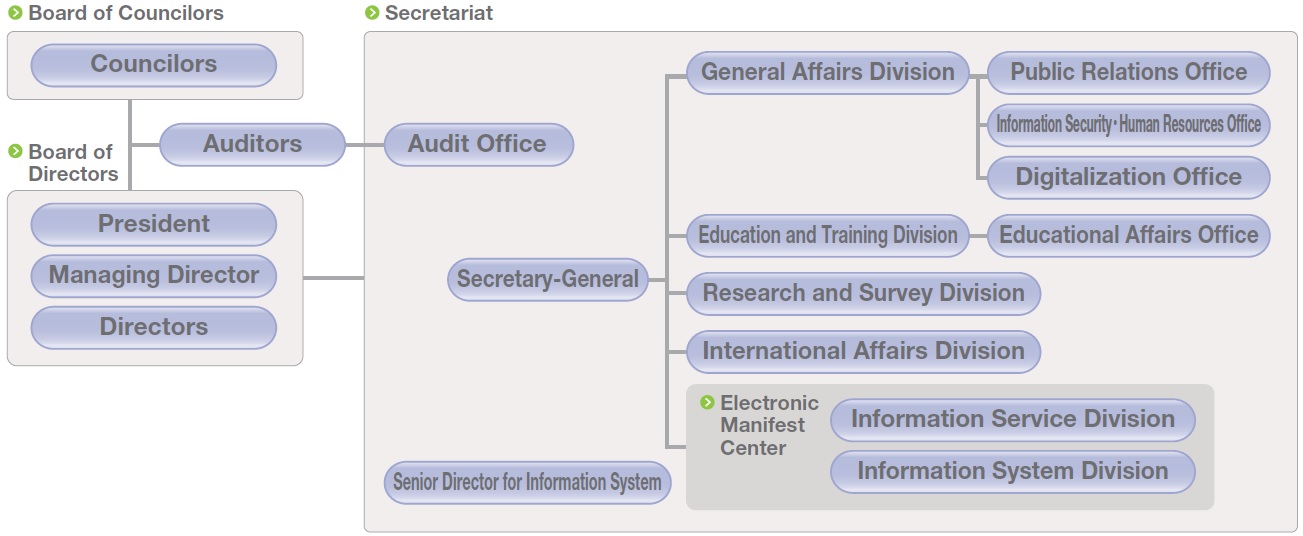
Organization Chart
Further Information
For further information, please contact the following.
International Affairs Division
Japan Industrial Waste Information Center
| Address |
3-24-6 Ueno Frontier Tower Bldg. 13F, |
|---|---|
| FAX | +81-3-5807-5912 |
| kokusai@jwnet.or.jp |
pamphlet
[PDF(4.29MB)]
Electronic Manifest
When industrial waste generators commission on the disposal of their wastes to others, they are requested to confirm that their wastes have been disposed properly by means of either the paper manifest or electronic manifest.
Under the Waste Management Law, the JW Center is designated by the Minister of the Environment as the exclusive Information Processing Center for the implementation of the electronic manifest.
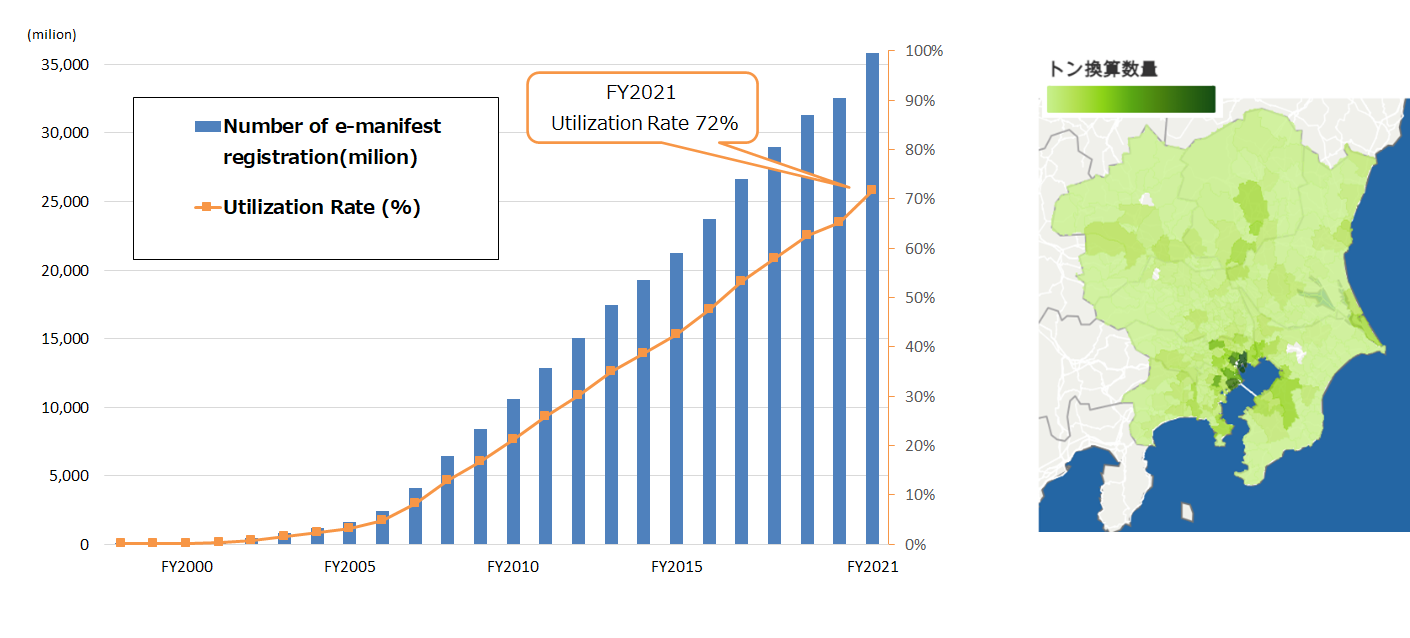
Growing use of e-manifest
Of all manifests, e-manifest reached 72% or 35.845 million registrations in FY2021, with 270,091 waste generators, 24,384 transporters and 9,653 disposers in use. The construction industry has the largest number of registrations, accounting for 41% followed by whole sales and retailing.
The 2017 Amendment to the Waste Management Law requires waste generators who generate more than 50 tons of specially controlled industrial waste annually to use the e-manifest. In December 2021, the utilization rate of e-manifests reached 70%, which the government had targeted to achieve by March 2022.The number of e-manifest users continues to increase. Now, the JW Center is studying the effective use of e-manifest information as big data for establishing a sound material-cycle society, for example, by using BI tools.
How the e-manifest system works
Three parties involved - the waste generator, the transporter and the disposer of wastes (the intermediate or the final disposer) - exchange computerized manifest data via the Information Processing Center over the internet.
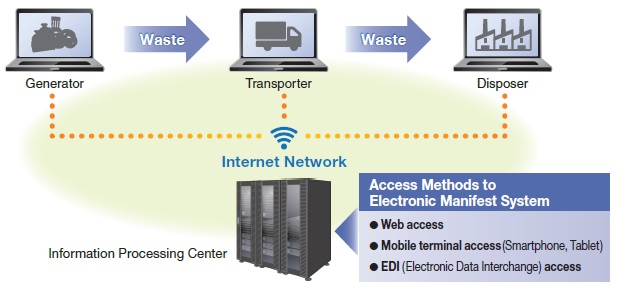
Services of the Information Processing Center
The JW Center as the Information Processing Center carries out the management and operation of the e-manifest system and the preservation of the data registered.
The JW Center also makes the following reporting to prefectural governments and designated cities according to the Waste Management Law.
・The yearly (from April 1st to March 31st) status report on the registration and reporting of the e-manifest to the prefectural government or the city that has jurisdiction over waste generation sites by June 30th of each year.
・The e-manifest report concerned upon requests by the local governments.
Promotion and publicity of the system
The JW Center is actively promoting the nationwide use of the e-manifest through,
・Providing orientation for transition to the e-manifest and relative cooperation,
・Holding the e-manifest trial seminars,
・Providing the demonstration version of the system,
・Preparing and distributing promotional brochures and videos, and
・Providing information related to the e-manifest on homepage.
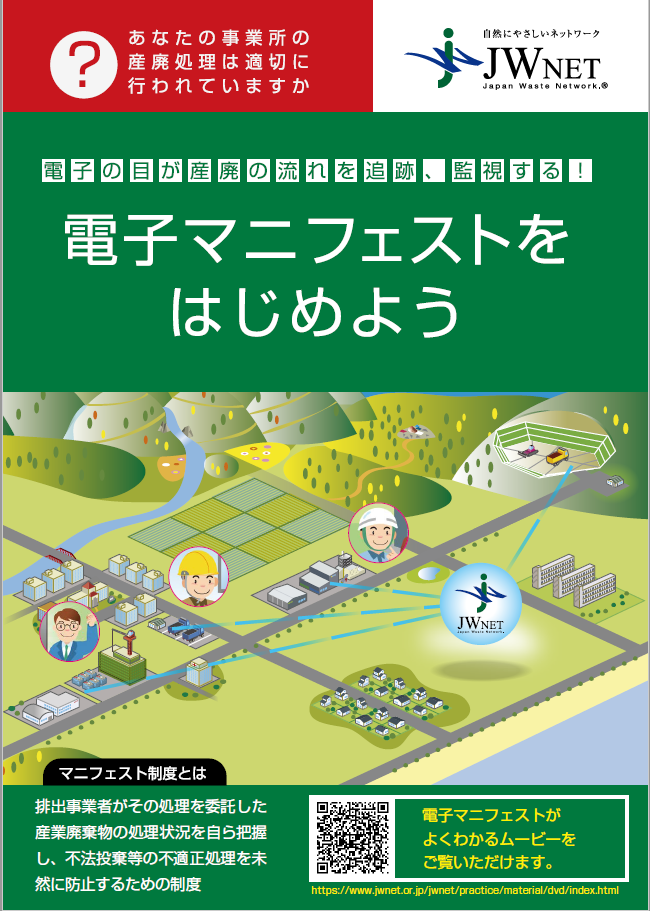
Pamphlet
Guidebook
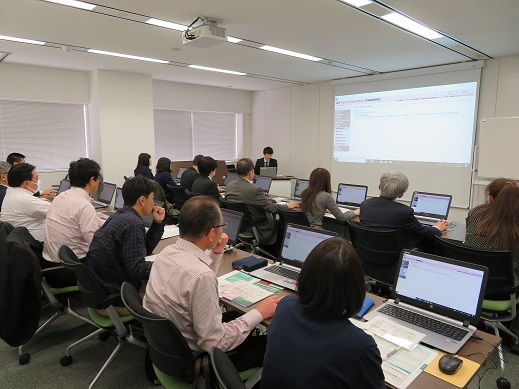
Electronic Manigest Trial Seminars
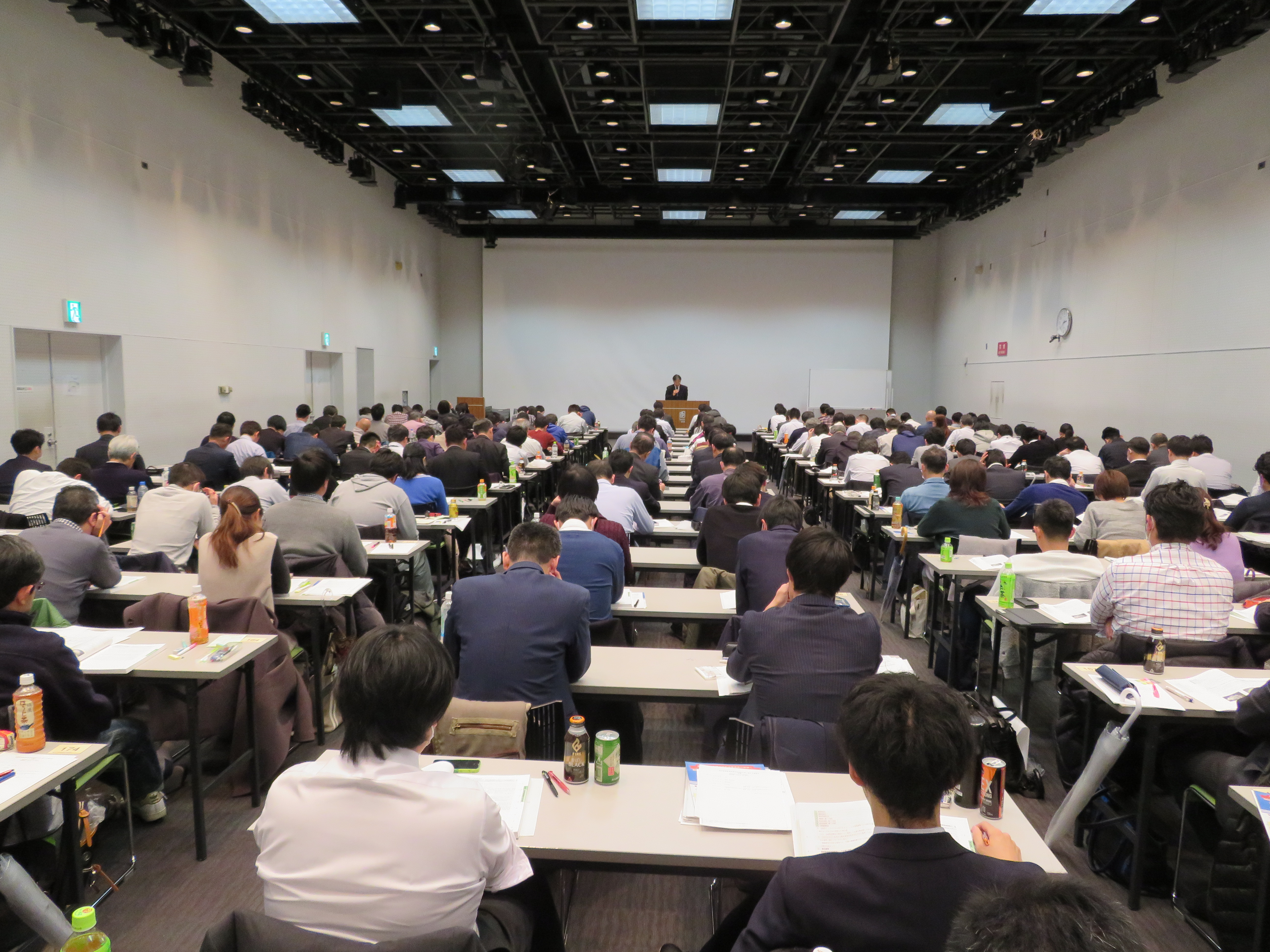
The JW Center provides various education and training courses for the generators, transporters and disposers of industrial wastes so as to let them acquire the specialized knowledge and skills required for the proper management of industrial wastes.
Education and training courses for managers of the specially controlled industrial wastes
Courses for acquiring the qualification for managers that are required by the law to be appointed at the site, generating the specially controlled industrial wastes with explosiveness, toxicity or infectiousness among industrial wastes.

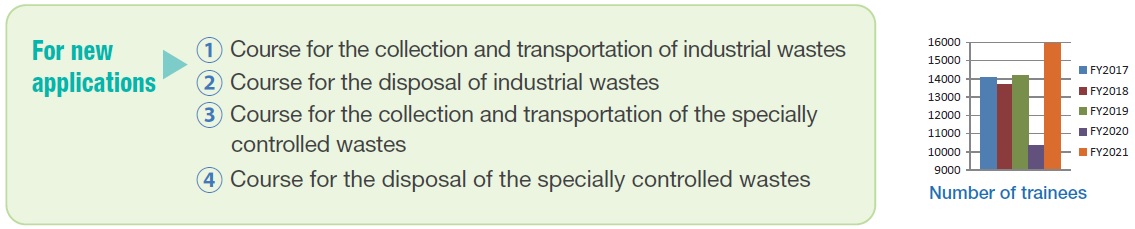
Courses for applying for the business licenses for the transportation and disposal of industrial wastes or the specially controlled industrial wastes
Courses for new and renewal applicants to acquire "sufficient knowledge for proper management" which is required by the law to apply for the business licenses for the collection and transportation, or disposal of industrial wastes.

Course for the collection and transportation of PCB wastes
Course to acquire "sufficient knowledge of the characteristics of PCB wastes", which is required by the law to apply for the business license for the collection and transportation of PCB wastes.
Workshop for waste generators engaged in managing industrial wastes
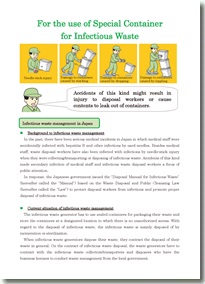
Evaluation of Receptacles for Infectious Wastes
leaflet
[PDF(0.99MB)]
Research
In addition, the JW Center collects and analyzes information on proper disposal and recycling of industrial waste, and provides information on the results.
International Cooperation
For the establishment of a sound material-cycle society in Asia, the JW Center carries out the collection and dissemination of information, and international cooperation.
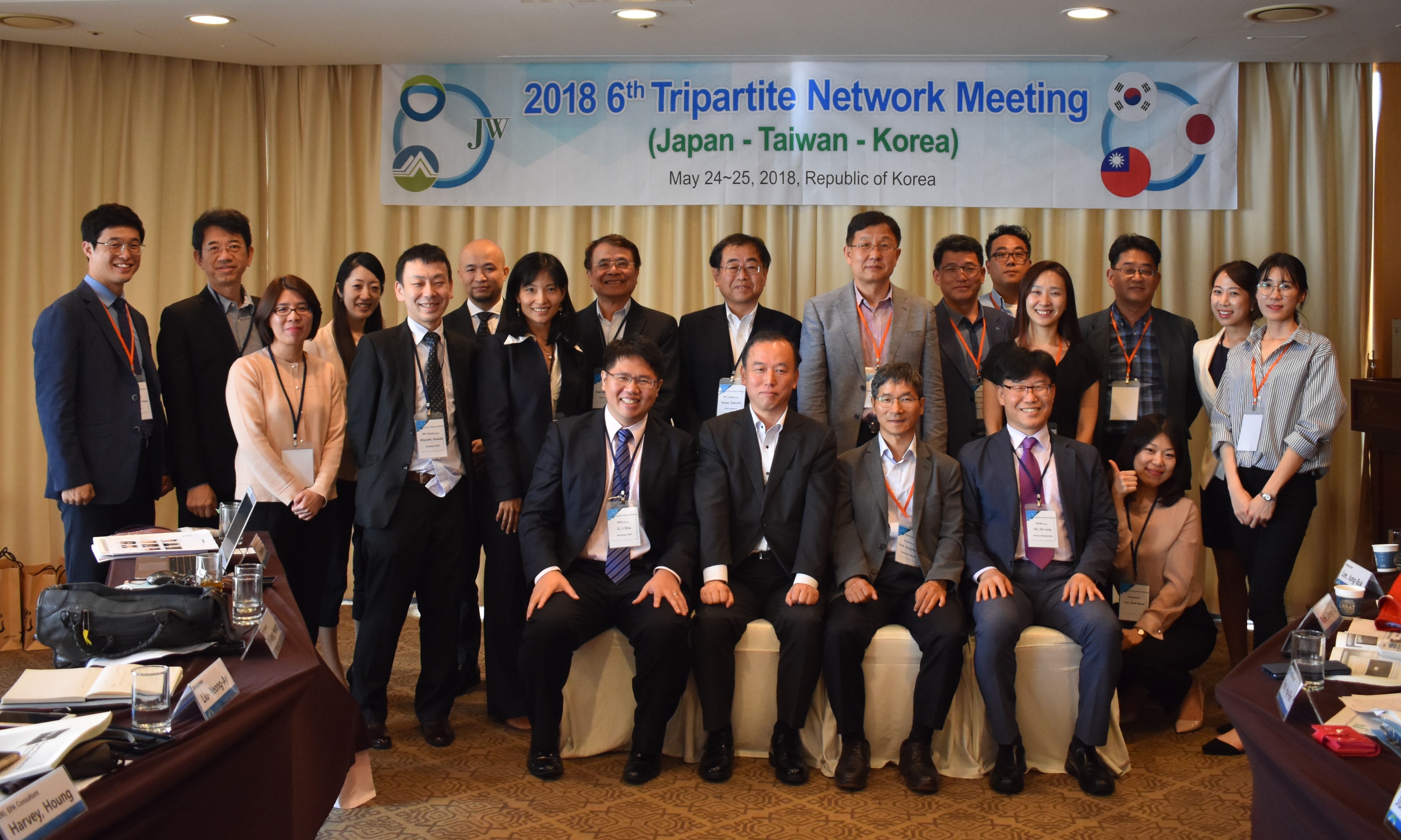
As a multi-lateral cooperation, JW Center participated in the 6th network meeting with Korea and Taiwan on the e- manifest and other waste management related issues held in Korea in May 2018.
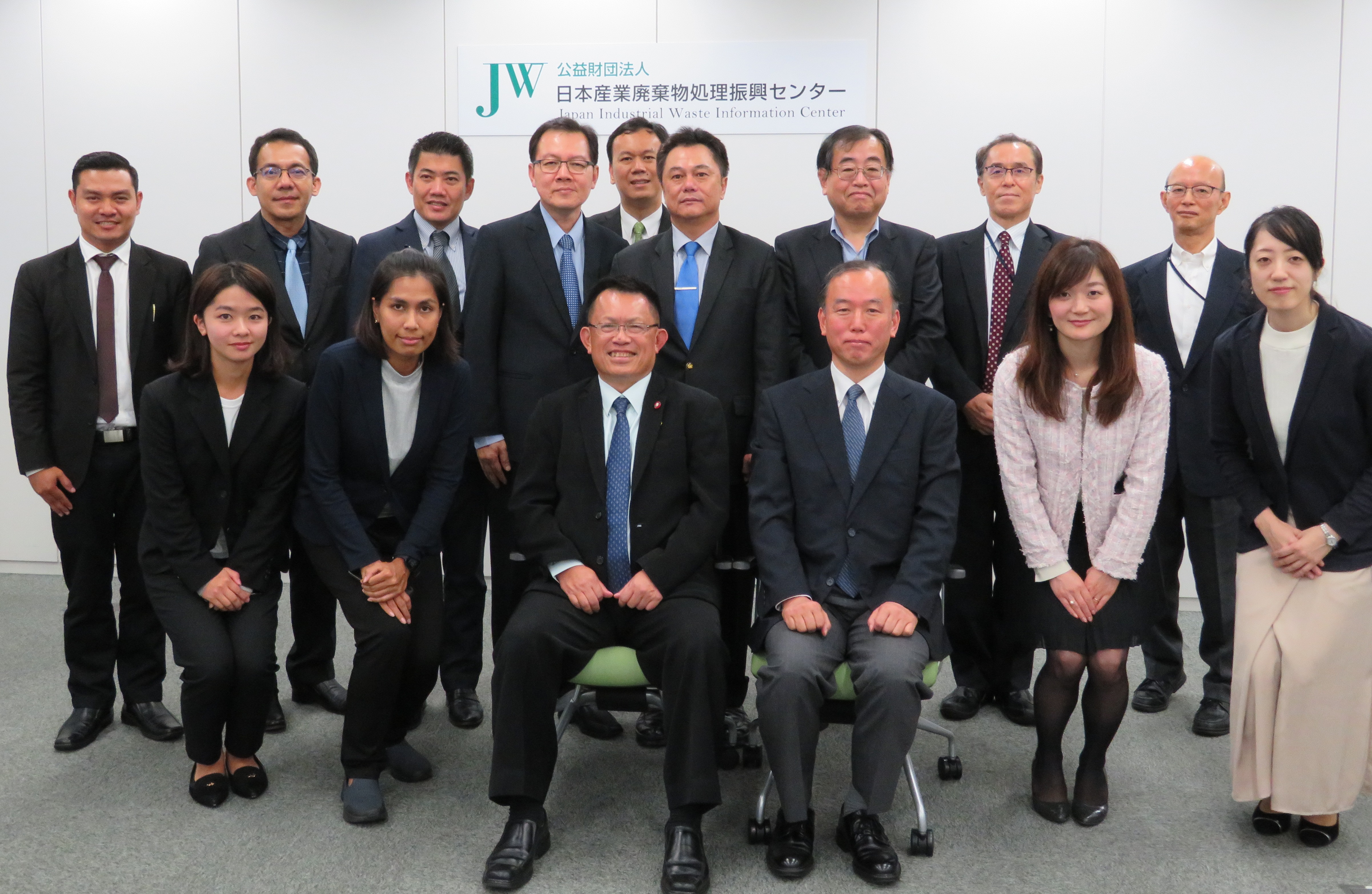
At the same time, JW Center promotes a bilateral cooperation in this field, and accepted government officials and researchers including Deputy Minister of Industry Thailand.
Publications and Publicity
JW Center Informationr
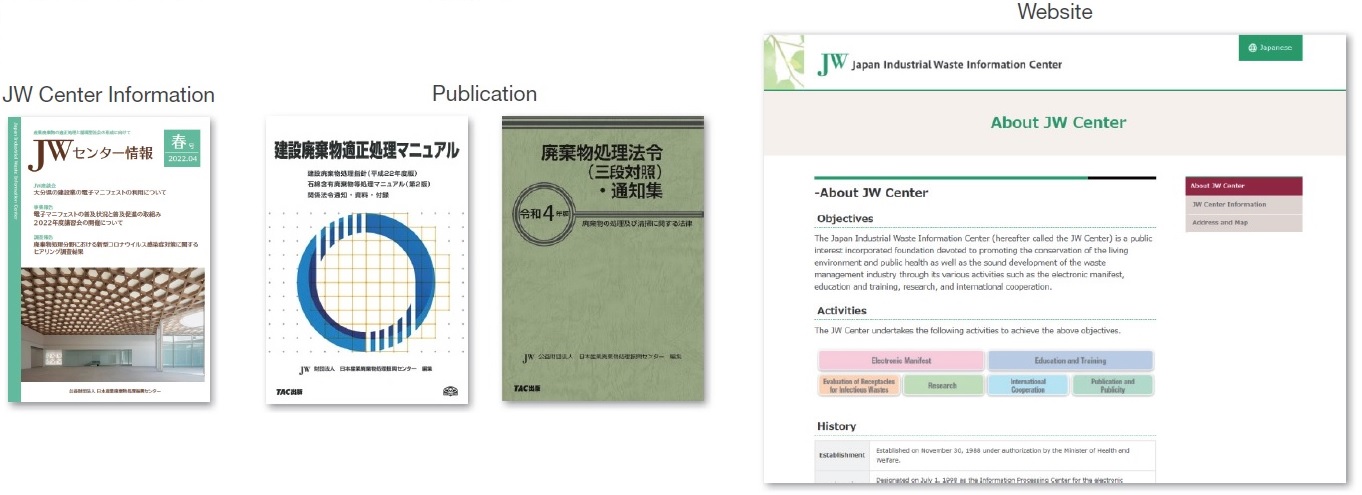
The JW Center also publishes a quarterly journal named "JW Center Information", where updated information on policies and technologies related to industrial wastes is given.
Publishing books
The JW Center publishes manuals and books on the Waste Management Law to promote proper management and the 3Rs of industrial wastes.
Public information through website etc.
The JW Center informs of its latest activities through the homepage and e-mail magazine.
JW Social gathering
The JW Center provides Social gathering focusing on topics and special issues on industrial wastes, and the latest information on them.